Tennessee Valley Audiology

Tennessee Valley Audiololgy Blog

Home
Location and Directions
Drs. Earl and Staff
Hearing Evaluations
Auditory Processing Disorders
Auditory Training Software
Hearing Aids
Hearing Aid Styles
Cutting Edge Developments
Hearing Hall of Fame
Assistive Listening Devices
Order Hearing Aid Supplies
Blog
Battery Blowout
Newsletter
Patient Information Forms
Useful Links
Site Map
Hearing Aid Domes

Email Newsletter icon, E-mail Newsletter icon, Email List icon, E-mail List icon Sign up for our Email Newsletter
For Email Marketing you can trust

Wednesday, August 11, 2010

Tinnitus Help

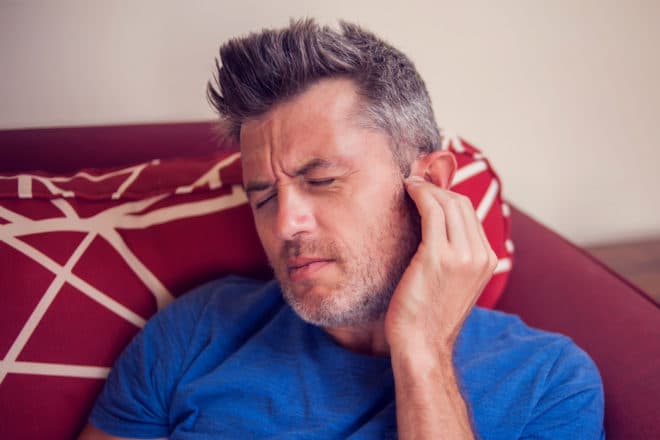
Tinnitus is that annoying sound that occurs in your head which is not caused by sound around you.  The most common type is called subjective tinnitus which is a sound that only the person with it can hear.  There is also a less common form call objective tinnitus which other people can hear.  Most of the time objective tinnitus is a medical condition and is often related to vascular problems in the neck or head.

People with tinnitus fall into two groups.  The first (most common) are people who say that their ears ring, but it does not bother them.  The second group are people who are pretty much consumed by their head noise.  To date there is no cure for subjective tinnitus, but there is help.  The first group very often get help with use of hearing aids.  The second group often needs help with their hearing and and additional noise generator which helps to blend their ear noise into the background to become less bothersome.  Two such devices are the Widex Mind 440 which has a unique offering of music tones and can provide significant relief and relaxation.  The other instrument is the GN Resound TS which offers a shaped white noise which helps to blend their tinnitus with the noise generated to become less bothersome. 

We offer both of these products in our practice.

Others have received help with nutritional supplements such as Niacin, Lipoflavenoids and products such as T-Gone.  The American Tinnitus Association says that most supplements available in the US are not harmful and that some people in fact get relief.  

There are links on our link page to more tinnitus information.  Check them out. 

10:10 pm est

Wednesday, July 7, 2010

HOT Summer Days!
With the extreme heat being experienced in many parts of our country people are experiencing moisture related problems with their hearing aids.  Humidity and perspiration are the two greatest sources of moisture in hearing aids.  In order to prevent moisture related problems you either need to avoid the moisture (i.e. not wear your hearing aids), cover your hearing aids or dry them every day with a machine specifically designed to thorougly remove moisture from hearing aids.  Avoiding the moisture may work for some individuals, but you may miss out on a good bit of hearing as the hot summer days are here for a few months.  Protecting your hearing aids with a cover such as a Hearing Aid Sweatband or Ear Gear covers is very effective for most people.  Placing your aids in a dryer at night is another great solution.  There are many different types of dryers from simple desiccants to machines which remove moisture with desiccants, pass warm air around the aids and sanitize them.  We prefer the Dry and Store  brand of dryer as we feel that it offers the best, most thorough drying of the hearing aids.  Some people require combinations of these products to effectively manage moisture in their hearing aids. 

Moisture problems tend to be worse, or at least more prevelant, with older hearing aids.  Once an older aid shows moisture damage, it is not unusual to need to have a hearing aid fully reconditioned at the factory (start with a "clean slate") and then start a daily program of moisture management.

Managing moisture on a daily basis will keep your hearing aids functioning better on a day to day basis and help your hearing aids last longer with fewer repairs.  The price of proper moisture care is small when compared to the cost of your hearing aids or even the cost of repairs.

Protect your hearing aids....Keep Them Dry...they last longer!
9:19 am est

Friday, June 25, 2010

FM Systems
FM systems have come of age.  They can make a huge difference for listening in hard listening environments.  In addition, they are very helpful for TV listening and some models offer excellent assistance for telephone listening.  These work!  FM systems work in conjunction with your hearing aids and offer help in those situations where your hearing aids often don't quite help like listening in restaurants, hearing clearing while riding in the car and many others.  Right now the leader in the field of FM technology is Phonak.  Their FM systems work with most brands of hearing aids if they have a telecoil or direct auditory input (DAI).  Here is a link to the Phonak FM site for more information.  http://www.phonak.com/us/b2c/en/products/fm.html  We have had great success with these systems. 
2:19 pm est

Thursday, June 17, 2010

Continuing Education
We have spent the entire day at a continuing education seminar regarding the latest research on inner anatomy and physiology.  It still amazes me that there are so many "unknowns" regarding the physiology of the ear.  We were studying receptor cell function at the molecular level under the instruction of Peter Dallos, Ph.D., one of the top auditory physiologists in the world.  It is truly amazing how wonderfully designed the human body is.  Needless to say we were enthralled.  We are looking forward to tomorrows session.  We love this stuff!  Dr. Dallos is a remarkable teacher.

We also attended a continuing education course on Tuesday regarding the aging auditory system and possible ways to better predict outcomes with hearing aids.  What a week.

Next I will post the latest things regarding "connectivity" (i.e. hearing aids connecting to other devices).

Dennis Earl, Ph.D.
7:41 pm est

Wednesday, June 16, 2010

LACE auditory training
You can think of LACE as physical therapy for your ears. Most people who have joint replacement surgery expect to undergo physical therapy following surgery in order to effectively use their new joint. The same can be said for auditory training following hearing aid placement. LACE was designed to be used to help patients use their hearing aids more effectively. After using LACE patients report significant improvement in their ability to understand speech in social noise. What is LACE? LACE is an interactive computerized auditory training program for home use. Lace can assist in developing listening and communication skills and strategies that can help compensate for those situations when hearing is inadequate. What is the purpose of LACE? We may "hear" in our ears; but we "listen" with our brain. Hearing aids can help a person detect softer sounds, but they do not necessarily provide good listening skills. Even people with normal hearing can be poor listeners. Good listening skills are one of the components essential for effective communication. Other components include rapid thought processing, auditory memory, use of language skills, and interactive communication strategies. These skills can be damaged both by hearing loss and by the natural aging process. Lace is designed to enhance your ability to communicate by maximizing your listening skills and communication strategies. LACE provides a variety of interactive and adaptive tasks that will help train you to listen and communicate more effectively. LACE training is adaptive, so it is never too difficult of too easy. As you improve, the training intensifies. After a few sessions, you will find yourself conquering difficult listening situations you never imagined possible. LACE 4 marks a major milestone in the development of aural rehabilitation software and includes many new features and expanded functionality. Most notable is the addition of a companion DVD version of LACE packaged with the standard CD-ROM, enabling users without computers to benefit from LACE training by using their TV and any standard DVD player. Users easily navigate the interface using the arrows on the DVD remote. Key Features of LACE: -Home-based, self paced training -Complete training in 20 days -Runs on Windows or MacIntosh computers -Usable by computer novices -Can be used on your TV with DVD or your computer -Helps compensate for hearing loss -Displays daily and overall progress. Additional new features for PC users include flexible and unlimited training options beyond the standard 20 LACE training sessions and a new portable registration process. Actual unsolicited user comments Names hidden for privacy * "This (LACE) is an exemplary program. I am a speech pathologist and was particularly eager to take this program to have a better understanding of the tasks and goals. I have recommended it to a friend who works with seniors, many of whom have hearing loss. It's a good training program with many excellent suggestions interspersed with the tasks.
10:03 pm est

2010.08.01 | 2010.07.01 | 2010.06.01

Link to web log's RSS file